Treating Acid Sulphate Soil Runoff with a Nature-Based Approach
A wetland in Pori aims to reduce harmful substances and nutrients from ending up in the Baltic Sea with a filtration dam solution. The wetland is located on acid sulphate soils, and land use has had its unexpected consequences to the quality of the catchment waters over the years, resulting in acidic water with a high metals load. With online monitoring and water sample analyses, the effectiveness of the solution after one year of its completion has been studied.
Acid sulphate soils are former seabed resulting in sulphur-rich sediments in the sediment layer, commonly found in coastal areas in Finland. When sulphur-rich minerals in the soil oxidise, for example as a result of land use, they form sulphuric acid, which dissolves metals from the soil. These metals are then washed away with runoff water into other water bodies. Untreated runoff from acid sulphate soils has a detrimental effect on the ecological and chemical state of the receiving water body. (Autiola et al., 2022, pp. 12–13, 16.) The effects of acid sulphate soils on water quality have also been visible in the Pori wetland; the pH of the water is occasionally around 4–4.5 and contains metals such as iron, nickel, copper and aluminium.
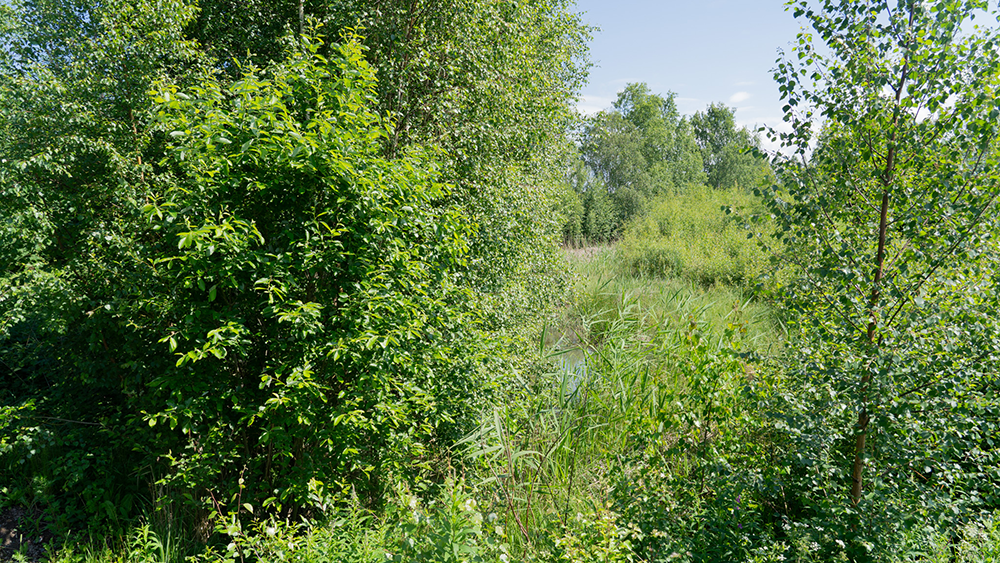
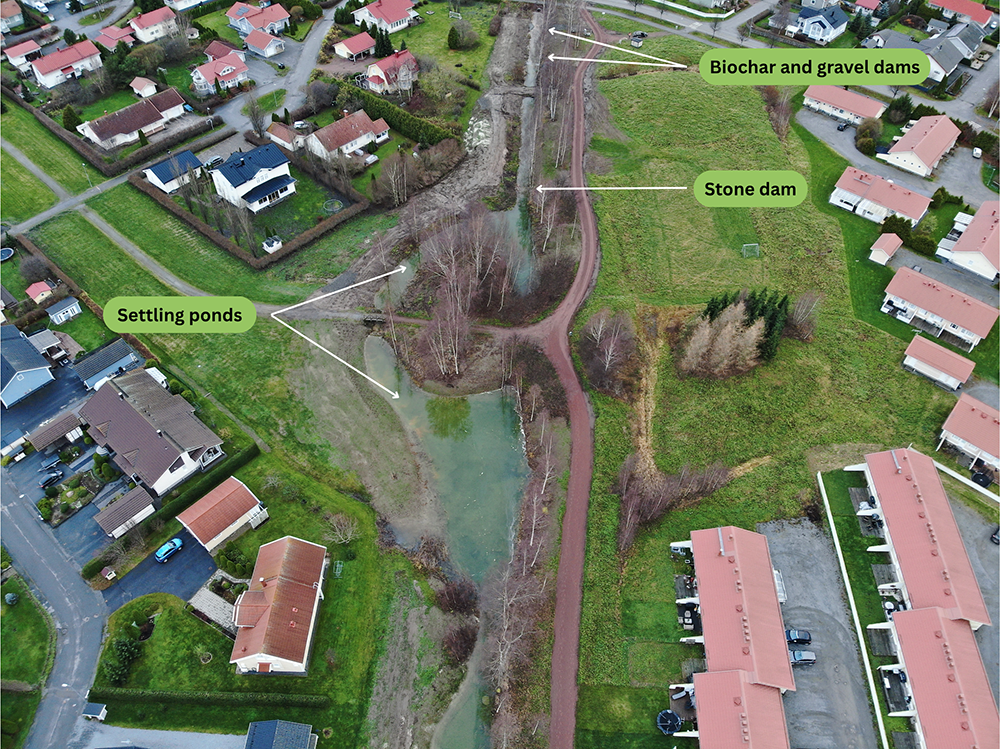
The wetland's nature-based solution consists of a filter dam system and settling ponds. There are three different types of dams, which are designed to treat and neutralize the water: two of the dams contain biochar and gravel (Photo 2), and one contains pumice stone and limestone (Photo 3). In addition, the wetland has two stone dams to slow down the flow of water and improve the settling of solids. The dams, water retention and planted vegetation are intended to improve the water quality in the wetland.
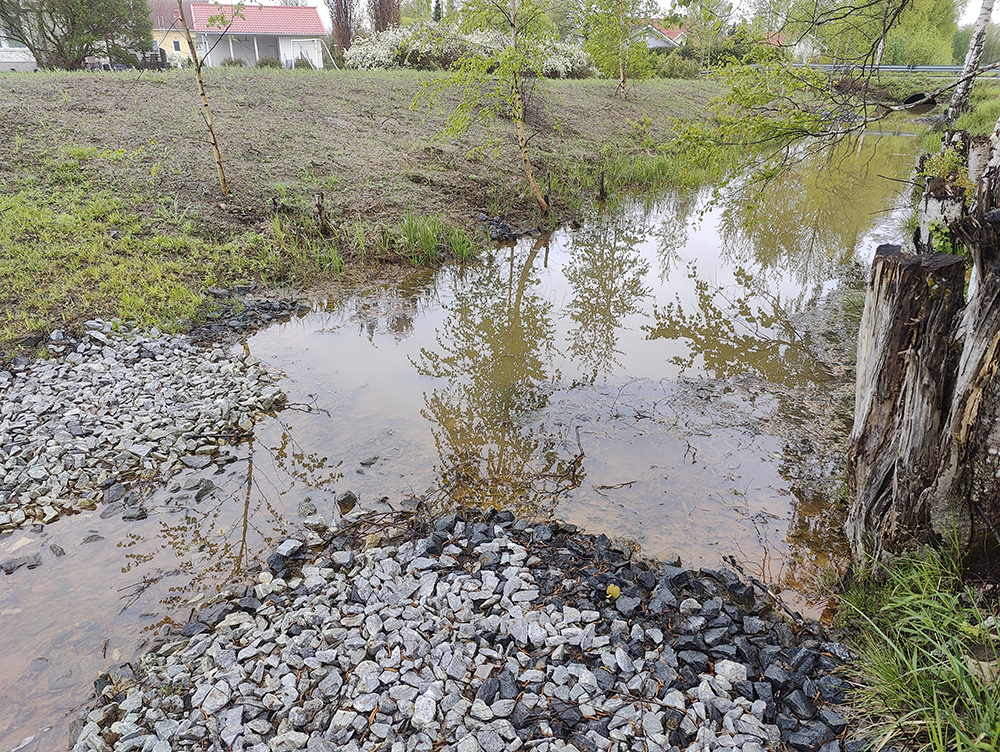
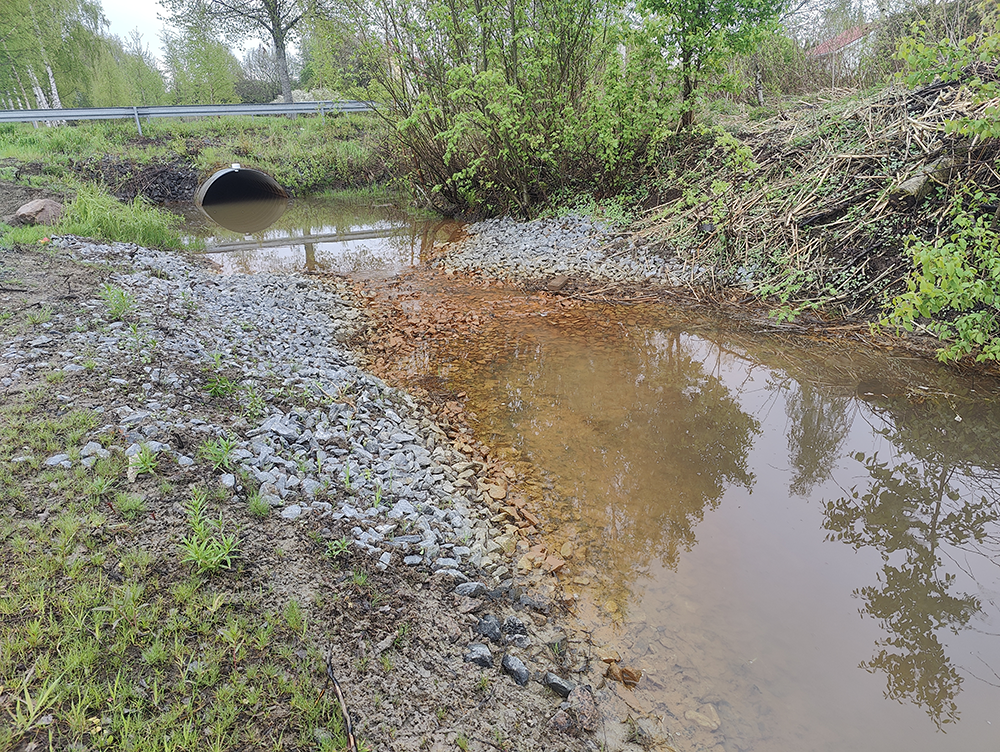
Photos 2 and 3. The dams containing biochar and gravel aim to treat the water while the limestone and pumice dam aims to neutralise the acidity of the water (Photos: Meri-Maaria Salo, May 2025).
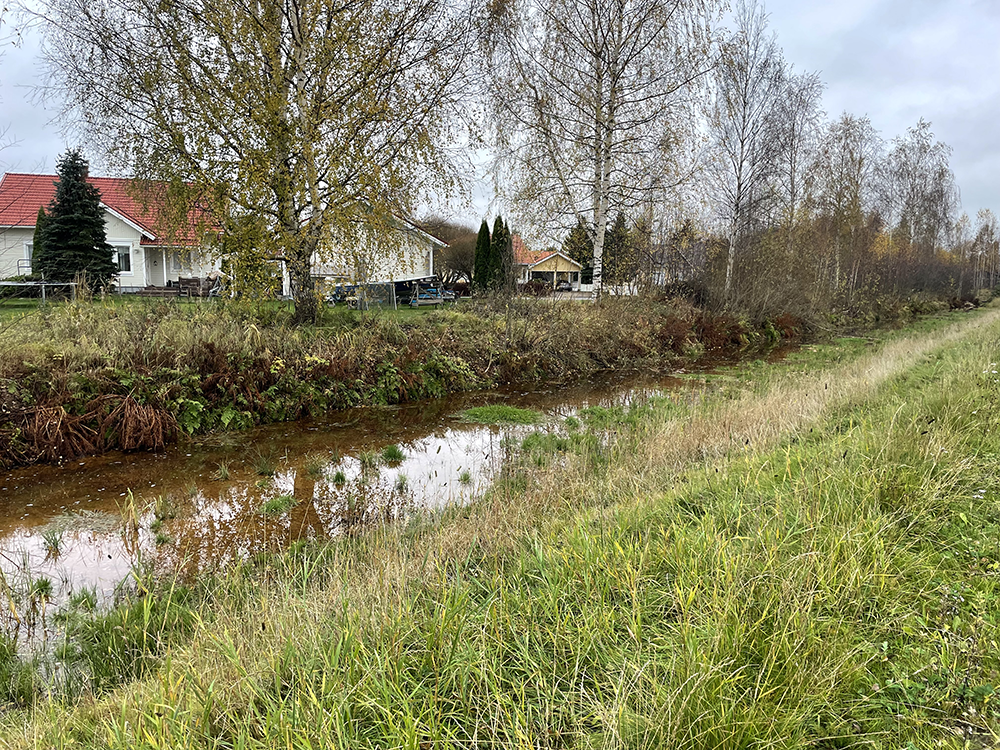
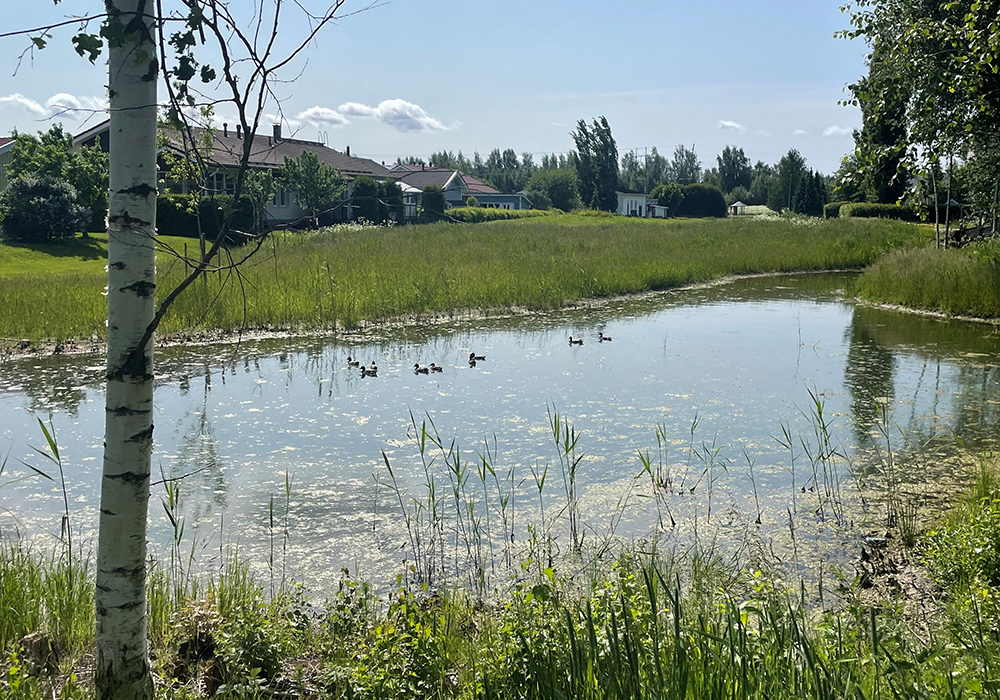
The solution aims to neutralise the water before it reaches the downstream ditches – when the acidic water from the wetland combines with more neutral water, the metals dissolved in the wetland water precipitate and form metal-rich sludge on the bottom of the receiving water bodies. The goal is that by neutralising the water in the wetland, the metals would precipitate in a settling pond at the end of the wetland (Photo 4), from which the metal sludge can be more easily removed and further processed.
Results, Successes and Challenges
The effectiveness of the wetland solution has been monitored since its completion with traditional water sampling and continuous measuring devices. Continuous measuring includes pH of the water, the level of perched groundwater, and the flow of water as well as rainfall data from a nearby weather station. Visits to the wetland have also been important for visual monitoring, for example in assessing the condition of the dams.
The target outcome of the solution in terms of water quality is to reduce TSS by 60%, total nitrogen by 40%, metals by 40% and increase the pH of the water by 0.5 units compared to the baseline. Due to the wetland’s location on acid sulphate soils, especially the metal concentrations and pH of the water were of particular interest. The studied total and soluble concentrations of metals included arsenic, cadmium, chromium, copper, nickel, zinc, aluminium, manganese, and iron.
The dams and settling ponds have proven to be especially effective in the reduction of TSS, where clear results have been achieved. The biggest challenge has been the excessive acidity of the water, which is difficult to neutralise, and which weakens the retention of metals dissolved in the water. The neutralisation process is particularly complicated by the surrounding residential area’s drainage water and stormwater which are directed into the middle of the wetland. The location of the pumping station’s drainage pipe was not known until construction started. The drainage pipe leads to the middle of the two biochar and gravel filtration dams, and therefore, only one filtration dam is located optimally to treat the water coming from the pipe.
The effect of the drainage pipe can be clearly seen from the results, as the acidity and metal concentration levels increase towards the end of the wetland. The drainage pipe has also made it challenging to evaluate the actual effect of the solution, as the residential area’s stormwater increases the metal and acidification load, deteriorating the water quality, specifically the pH, at the end. However, a slight increase in pH has been evident when comparing two similar periods before and after construction. It should be noted that only by preventing the water from the drainage pipe entering the wetland would it be possible to fully evaluate the solution’s treatment effectiveness.
On the other hand, the water coming from two sources – catchment area and pumping station – has offered information on the acid sulphate soils and emphasized the importance of taking the acid sulphate soils into account during any kind of land use. The wetland’s catchment area consists mostly of fields, which were dredged in the 1960s and 1970s. The metal concentrations are lower at the beginning of the wetland, where most of the water is from the catchment area, which indicates that most of the metals and acidity have been leached from the soil since dredging. Instead, it was observed that the water from the surrounding residential area is high in acidity and metals, which indicates that the oxidation is still an ongoing process in the area which was built in the early 2000s. This emphasizes the importance of prevention and educating people about the long-term environmental risks connected to acid sulphate soils.
Regarding the metal concentrations, reductions in aluminium, nickel and manganese concentrations can still be seen in the results. The iron concentrations in the waters have varied greatly depending on the season. Wetlands are generally challenging in the Finnish climate as the cold weather weakens many wetland mechanisms, especially biological ones (Yu et al., 2021, p. 9).
One of the challenges in the wetland prior to the solution was that the water level was low during dry periods. Since its implementation, the water level in the wetland has remained well above 0 m that the bottom of the wetland has not been exposed to oxygen – preventing more harmful effects of the acid sulphate soils as well as increasing the attractiveness of the area.
Multi-Benefit Solutions Bringing Increased Awareness
The wetland solution not only aims to improve the treatment and management of the water but also increase the recreational value and biodiversity of the area, as well as awareness of the problems caused by acid sulphate soils and the importance of their prevention. Reductions in TSS and phosphorus have been achieved as a result of the solution as the stone dams slow the water flow, promoting sedimentation, and the filtration dams help removing phosphorus from the water. The wetland has not yet succeeded in reducing the total nitrogen. Acid sulphate soils often contain large stocks of nitrogen and as they are often waterlogged, the mineralization of nitrogen slows down due to the anoxic conditions, preventing the natural nitrogen cycle (Yli-Halla et al., 2020). The effectiveness of the solution was further complicated by the unexpected location of the pumping station’s drainage pipe.
The results indicate that long-term leaching from the nearby older fields has largely stabilised, whereas runoff from the residential area still shows intense acidity and metal release. This demonstrates that the impacts of acid sulphate soils can persist for decades, particularly after soil disturbance, underlining the need for proactive land-use planning and public awareness. In order to protect the ecological state of water bodies, it is important that acid sulphate soils are increasingly considered in both local land use and national legislation.
The long-term effectiveness of the solution will become clearer in the years to come. In addition to the lessons learned of the implementation and the design’s effectiveness so far, more experience will be gained on the dam filtration materials, ease of maintenance and how the diverse vegetation survives in the challenging conditions. These can then be applied to solutions in similar areas and improve the water runoff quality from acid sulphate soils elsewhere.
Meri-Maaria Salo
Project Manager, 0009-0009-8202-5909, Maritime Logistics Research Center
Meri holds a Master of Science (MSc) in environmental engineering and diverse experience in sustainability areas such as stormwater, carbon footprint calculation, and energy efficiency and renewable energy solutions.
Veera Seikkula
Researcher and project manager, 0009-0007-1151-2406, Maritime Logistics Research Center
Veera is a bio- and food engineer and a future chemical engineering (MSc) student specializing in water purification and water chemical processes.

The article was written as part of the MUSTBE project which is co-financed by the Interreg Central Baltic Programme. The MUSTBE project developed seven nature-based stormwater pilot solutions in four Central Baltic countries with the aim of improving stormwater treatment and management by combining nature-based stormwater solutions with digital solutions.