Finland’s Integrated Arctic Competence Ecosystem: A Model for Global Maritime Capability Development
Abstract
The article brings together the current opportunities for Arctic shipping and the collaboration between educational institutions (in both teaching and research) and industry at the national and international levels. The author is the Head of the Maritime Logistics Research Center at Satakunta University of Applied Sciences.
The author of the article, who in daily work engages in research activities related to Arctic shipping as well as explores new perspectives for continuing education in the maritime sector.
The geopolitical situation and the rapid transformation of the maritime cluster—driven in particular by the growing interest in exporting shipbuilding expertise—are key perspectives as the research framework expands. Arctic competence and security of supply are emerging as top priorities.
Finland has established a globally recognized leadership position in Arctic maritime competence, combining advanced technology, high fidelity simulation environments, and extensive operational experience in the world’s most demanding ice conditions. This article examines the Finnish Arctic ecosystem—structured around the Ice Pact framework and the Finnish Maritime Cluster—and analyzes how a coordinated model linking government, industry, and education creates a comprehensive and scalable Arctic capability package. The article outlines mechanisms of government to government (G2G) knowledge transfer, industry–academia collaboration, shipyard integrated training, and specialized Arctic education. It further evaluates Finland’s high value training and technology solutions that support partners such as the USA, Canada, and other international stakeholders in developing long term Arctic operational readiness.
Introduction
The rapid strategic, environmental, and economic changes in Arctic regions have increased global interest in Arctic maritime capability. As northern sea routes open and operational requirements intensify, states and industries are seeking reliable, evidence-based models for capacity building in cold and ice-covered environments. Finland offers a unique and internationally relevant approach. With a long history of Arctic shipbuilding, icebreaker operations, and simulation based maritime education, Finland has developed a holistic framework that integrates national expertise into a globally applicable solution package.
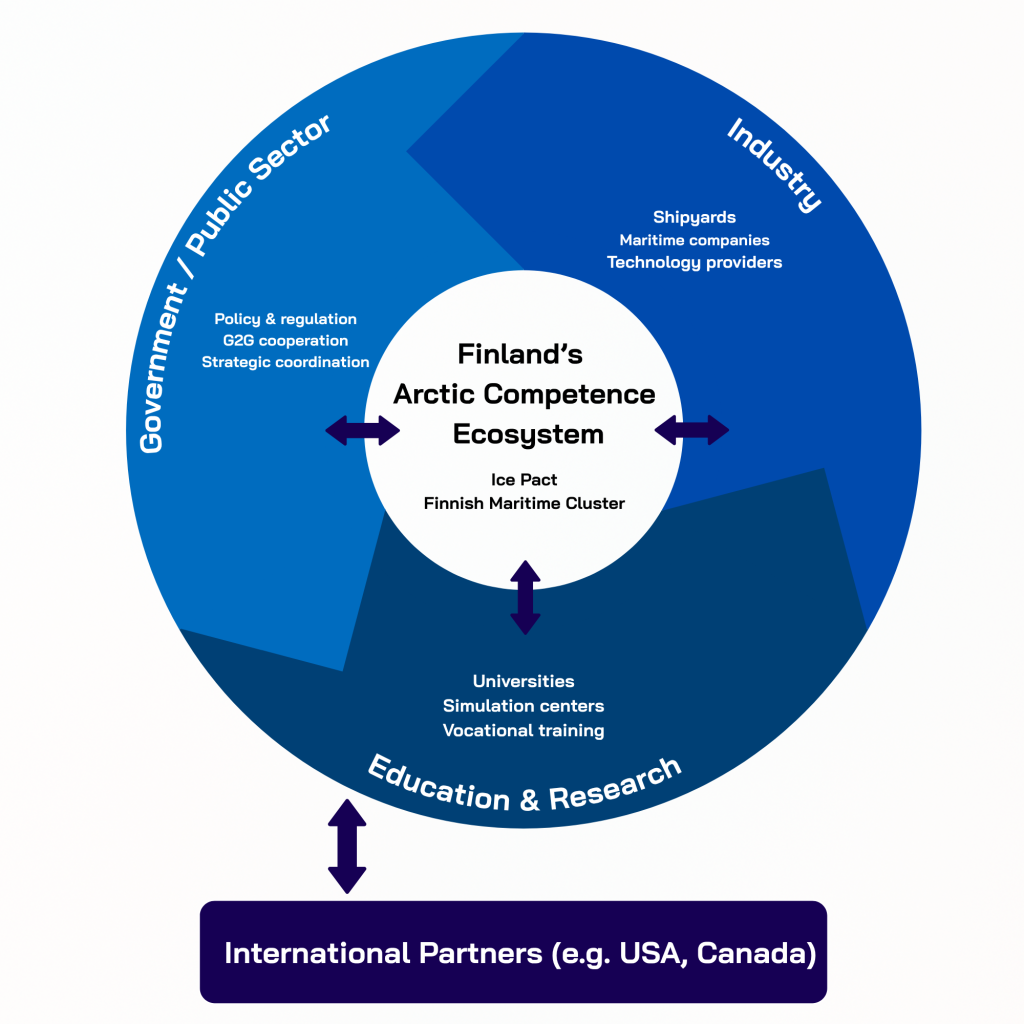
The Finnish model is built around two core structures: the Ice Pact, a co-operation initiative supporting Arctic capability development, and the Finnish Maritime Cluster, which connects research institutions, maritime companies, shipyards, ports, and governmental actors. Together, they form a complete ecosystem designed to support sovereign Arctic readiness, technological advancement, and the professional development of Arctic specialists.
Government-to-Government Knowledge Transfer: Building Long-Term Arctic Competence
A key pillar of Finland’s international offering is its structured G2G knowledge transfer model. This includes:
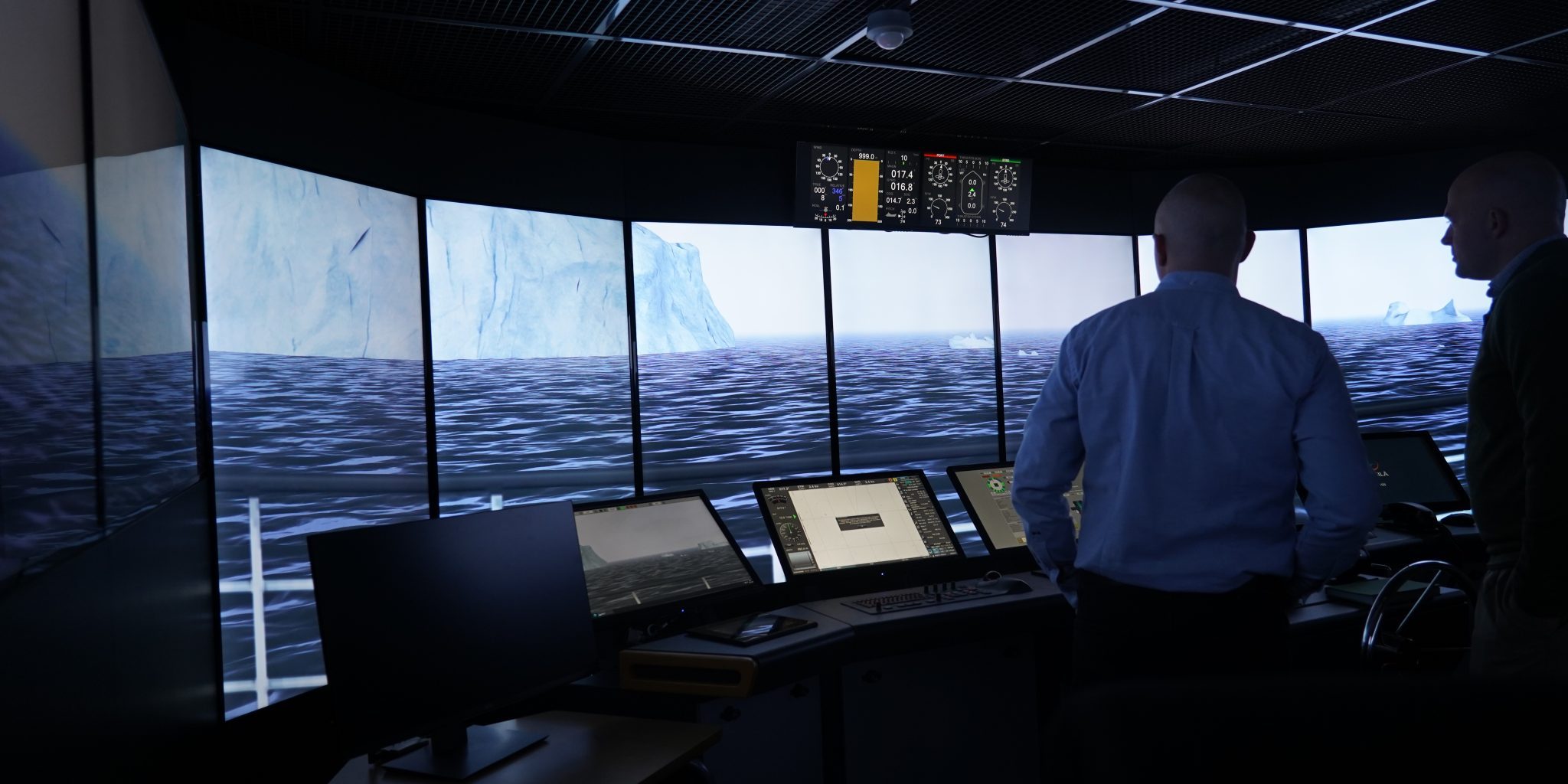
- Advanced Arctic icebreaker simulator modules enabling high-fidelity training and experimentation in complex ice conditions.
- Operational and design expertise grounded in decades of Finnish icebreaker development, fleet operations, and cold climate engineering.
- Research cooperation with international bodies such as the International Maritime Organization (IMO) and global maritime universities.
This system supports sovereign capability building by strengthening safety standards, operational effectiveness, and strategic preparedness. The approach is collaborative rather than transactional: long-term partnerships allow countries to internalize Arctic expertise rather than depend on external service providers.
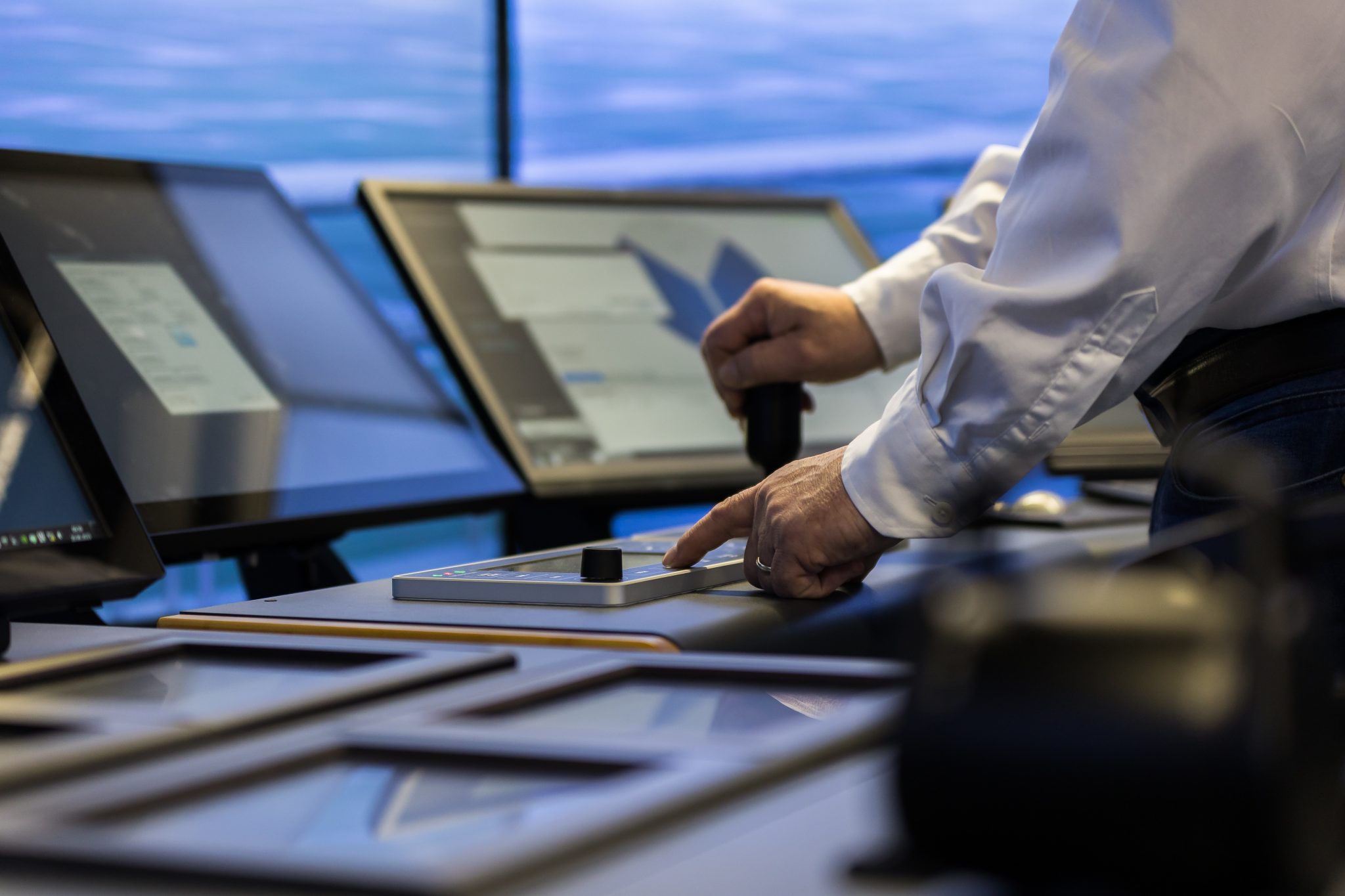
Industry–Education Collaboration: A Continuous Pipeline of Arctic Expertise
Finland’s maritime ecosystem integrates industrial innovation with academic and vocational education. This collaboration addresses emerging skill needs and accelerates the adaptation of new technologies.
Core competence areas include:
- Ice class ship design and hull form optimization.
- Systems and redundancy engineering for resilient operations in extreme cold.
- Commissioning integration, connecting theory to real-world shipyard processes.
This tripartite model—industry, education, public-sector stakeholders—produces a continuous talent pipeline and supports the rapid diffusion of innovation across the maritime sector.
Shipyard Integrated Training: From Theory to Practice
Finnish shipyards operate closely with educational institutions to embed training into shipbuilding workflows. This generates:
- Multilevel training pathways across maritime engineering, operations, and technical trades.
- Authentic learning environments where students engage directly with vessel construction.
- Exposure to state-of-the-art Arctic shipbuilding and operational innovation.
The shipyard–academia model is internationally benchmarked and provides practical, scalable workforce development solutions for global partners seeking to expand Arctic capability. This collaborative approach also strengthens the long-term competitiveness of the maritime cluster by ensuring a steady pipeline of Arctic skilled professionals. Moreover, it aligns with global recommendations emphasizing workforce resilience and cross sectoral training to meet emerging demands in cold region maritime operations (The Ocean Economy in 2030).
Specialized Arctic Education: Preparing Future Maritime Leaders
Finland’s educational institutions offer a comprehensive suite of Arctic focused programs, covering:
- Polar survival training
- Frost & ice operations
- Healthcare in Arctic environments
- Human performance in extreme cold
- Safety and resilience in polar conditions
Together, these programs create a multidisciplinary competence base essential for safe and sustainable operations in northern regions. The combination of classroom instruction, simulation, and hands-on training enhances operational readiness and supports evidence-based decision-making in challenging environments.
Arctic Training & Technology Solutions: Enhancing Competitiveness and Reducing Risk
Finland supplements its educational offerings with high value Arctic solutions:
- Advanced simulators and Arctic expertise platforms
- Comprehensive simulation-based training packages
- Specialized Arctic operational programs
These solutions reduce operational risk, increase efficiency, and accelerate skill acquisition. They are valuable across civilian, commercial, and governmental sectors, providing partners with tools to enhance readiness in demanding northern conditions.
Discussion: Finland’s Ecosystem Approach as a Global Model
Finland’s integrated Arctic capability framework demonstrates the effectiveness of coordinated national collaboration. The system’s strength lies in its holistic structure: shipyards, ports, maritime companies, universities, and public authorities collectively generate a robust environment for training, innovation, and operational excellence.
This model offers global partners—notably the USA and Canada—an opportunity to acquire world-class Arctic capabilities through scalable, modular cooperation programs. The Finnish approach supports:
- Strategic capability building
- Sustainable development
- Workforce development
- Long-term operational resilience
Its applicability extends to nations preparing for increased Arctic activity as climate trends evolve, and new shipping routes emerge.
The geopolitical situation and the rapid transformation of the maritime cluster—driven in particular by the growing interest in exporting shipbuilding expertise—are key perspectives as the research framework expands. Arctic competence and security of supply are emerging as top priorities, reflecting both national strategic interests and the broader international attention toward sustainable and resilient maritime operations. These developments underline the need for multidisciplinary research and closer collaboration across sectors, ensuring that future solutions are grounded in both technological innovation and long-term regional stability (Arctic council, Arctic Marine Shipping Assessment. 2009)
Conclusion
Finland’s Arctic maritime expertise represents a globally significant resource for states and industries operating in cold and ice-covered environments. Through the Ice Pact and the Finnish Maritime Cluster, Finland delivers a comprehensive Arctic capability package that integrates technology, education, research, and government cooperation. This ecosystem not only advances operational readiness but also supports sustainable, safe, and resilient maritime activities in the world’s most challenging environments.
The Finnish model thus provides a replicable blueprint for international partners seeking long-term Arctic competence and leadership.
Katri-Piia Rajala
Head of Research, 0009-0006-7174-0905, Maritime Logistics Research Center
The author is the head of the Maritime Logistics Research Center and the Maritime Continuing Education Center.
Business management, security of supply and change management through the development and growth of new business models are the author's top skills. Partnerships and combining multidisciplinary expertise are choices to enable national and international working life-oriented research.