Nature Meets Urban Infrastructure – Improving Resilience and Stormwater Management with a Nature-Based Approach
Abstract
In dense urban areas with increased impermeable surfaces, stormwater management is crucial for managing flood risk. This will become more and more important in the future as climate change increases short and heavy rainfall (European Commission, n.d.). In addition to managing stormwater quantity, there is an increasing focus on the quality of stormwater. To manage both issues, a nature-based solution in a parking lot in the heart of Pori was implemented and its effectiveness monitored.
Stormwater is rainwater or meltwater that is drained from surfaces and roofs, the formation of which is particularly influenced by the proportion of impervious surface in the area. Stormwater is discharged untreated from stormwater drains into receiving water bodies, such as rivers and ultimately into the Baltic Sea. In urban areas, stormwater is contaminated with various nutrients and pollutants, including from traffic. (Kuntaliitto, 2012, pp. 18, 21, 124.) Nature-based solutions can be used to manage both the quality and quantity of stormwater with additional benefits such as a positive impact on biodiversity, air quality, and public health and well-being (European Commission, 2024).
It has already been noted that average rainfall and winter rainfall have increased in Finland, and for example in Satakunta, rainfall is estimated to increase by up to 30% in the future (Luomaranta et al., 2025, pp. 136, 151). Pori is classified as a significant flood risk area in Finland (Finnish Environment Institute, 2021), and in 2007, stormwater caused a flood that caused approximately 22 million euros in damage, as the flood and heavy rain damaged the city’s properties and vehicles (City of Pori, 2009, pp. 18, 23). Improving stormwater management in Pori is therefore especially important.
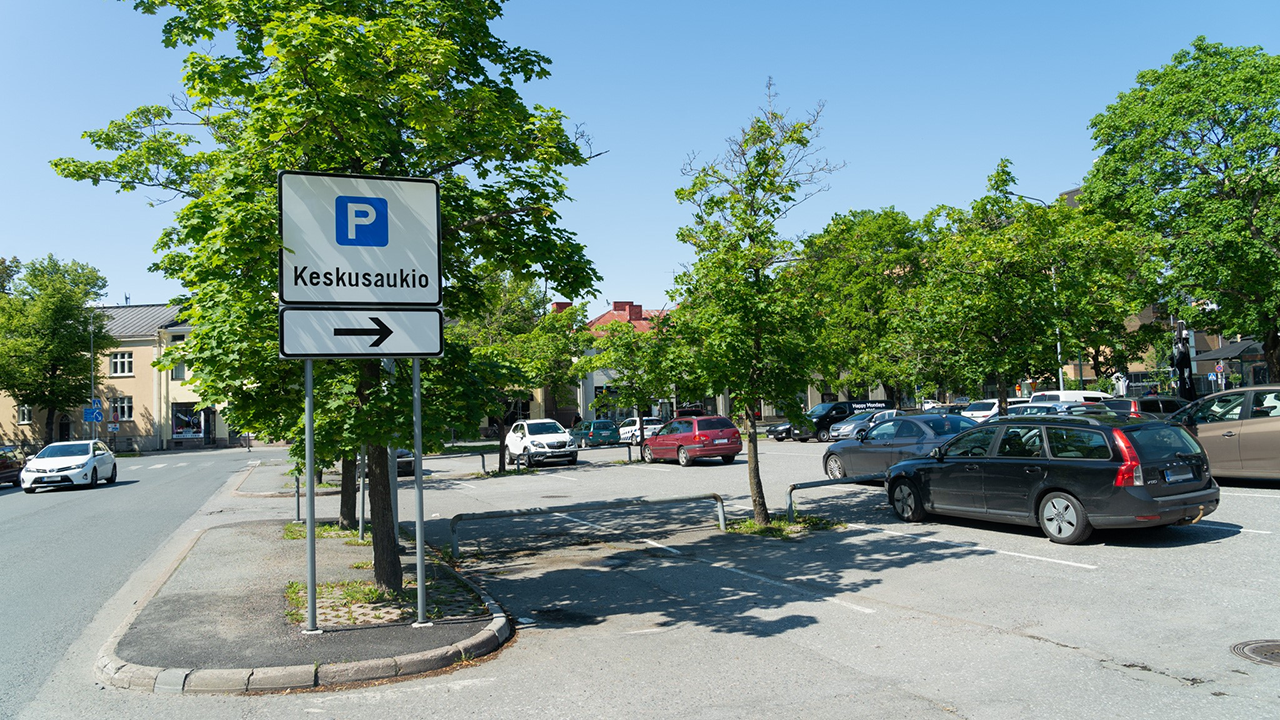
The Central Square parking lot is located in the middle of a dense city centre, which has previously caused stormwater challenges in the area, especially in winter; the district heating line has melted snow, which has refrozen into ice, hindering the use of the parking lot. In addition, the vegetation in the parking lot did not thrive, as the compacted soil weakened the water and oxygen supply of the roots, and the vegetation was located higher than the surrounding ground, preventing full utilisation of stormwater.
Green Lanes, Plant Embankments and Permeable Pavement
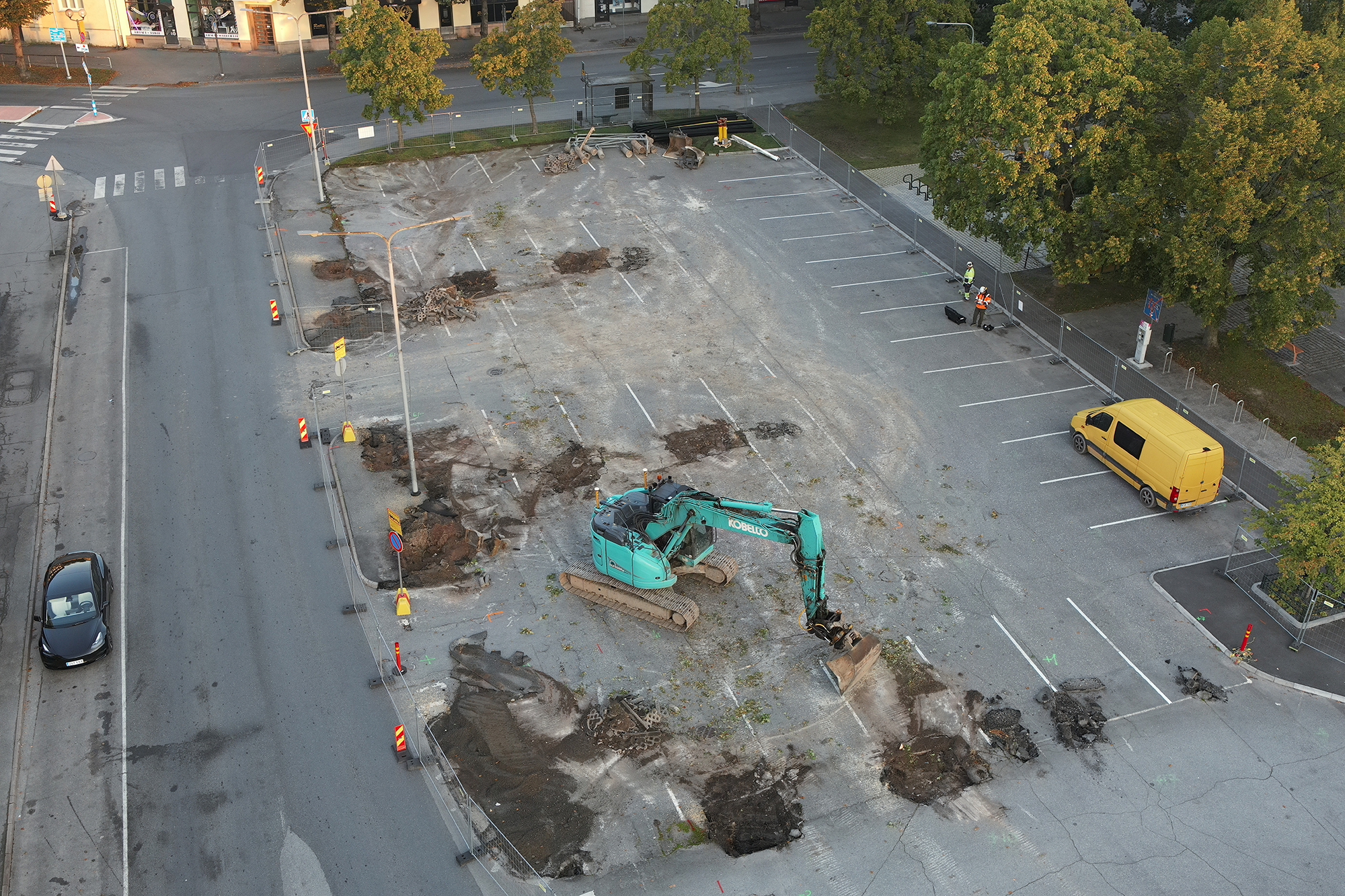
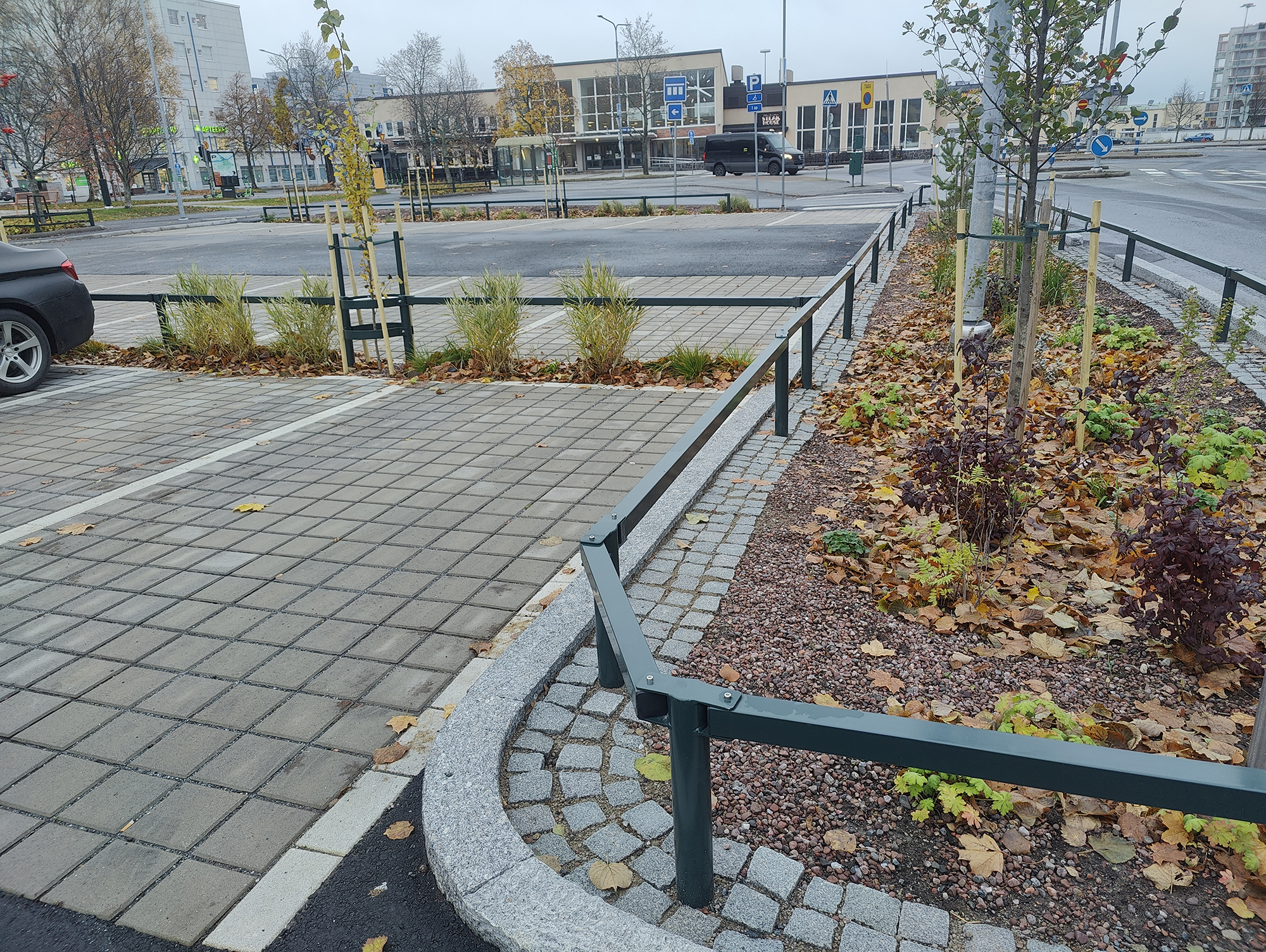
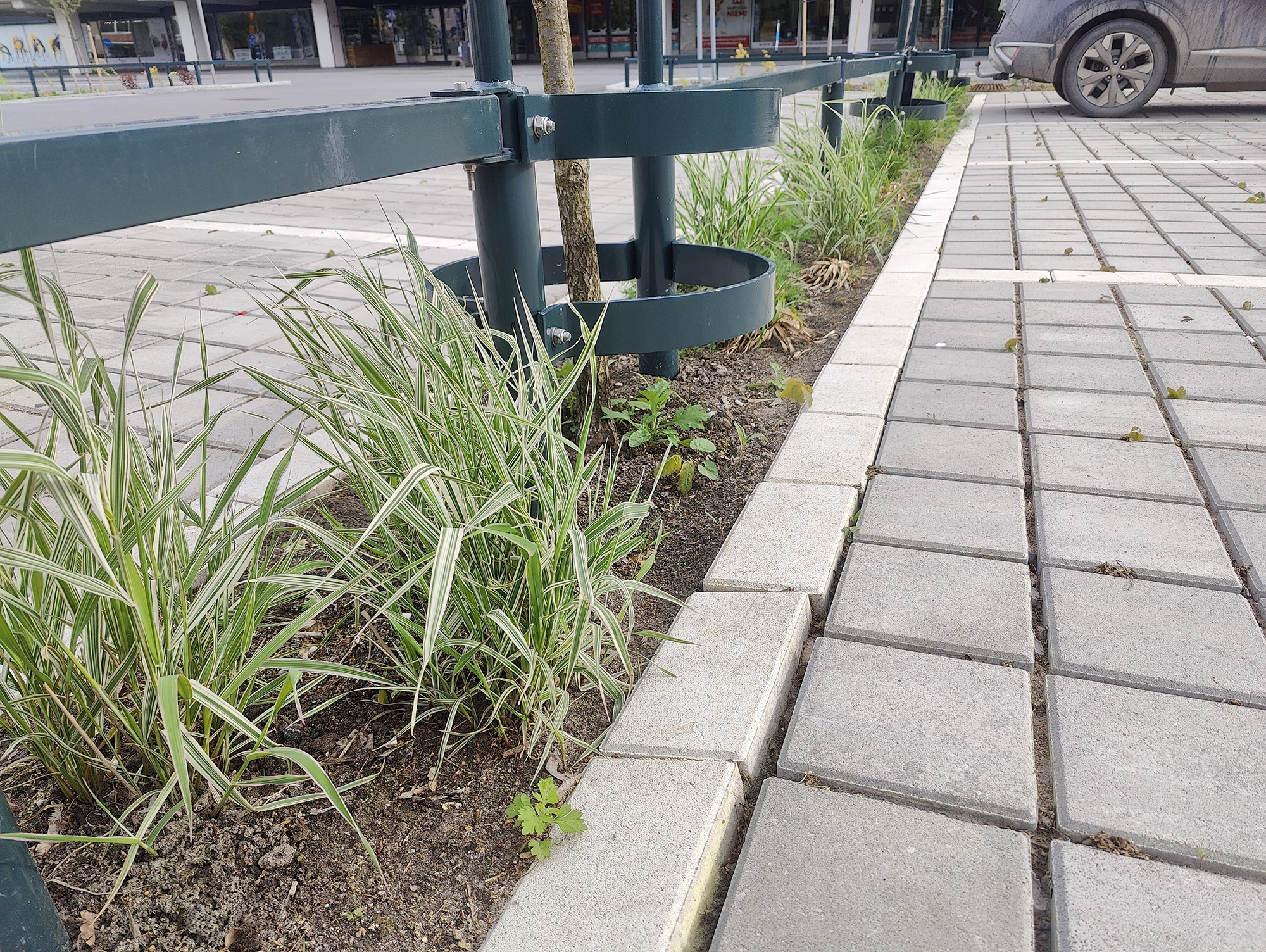
The nature-based solution for the Central Square parking lot primarily aims to improve stormwater management, but the solution also combines the well-being of green areas, traffic needs, stormwater treatment and limitations posed by the surrounding infrastructure. The green lanes in the Central Square parking lot were renewed and built on structural soil. The structural soil ensures sufficient water and oxygen supply for planted vegetation and trees in paved areas. The absorption and filtration of stormwater is aided by green lanes and plant embankments, to which water is directed using the slopes of the ground. In addition, the parking lot has permeable block paving instead of only asphalt to further enhance the absorption of stormwater into the soil and the roots of vegetation. Any excess stormwater filtered through the solution is directed further into the city’s stormwater pipe network.
The qualitative targets for the Central Square stormwater solution were set at 60% reduction in total suspended solids (TSS), 40% reduction in nitrogen, 50% reduction in hydrocarbons, 60% reduction in pathogens (E-coli) and 40% reduction in metals compared to the baseline taken in May 2023. The analysed metals included zinc, chromium, manganese and iron.
The effectiveness of the solution has been continuously monitored since the solution’s implementation by measuring the flow rate, salinity, temperature and electrical conductivity of the outflowing water, as well as with ground moisture sensors. The assessment of effectiveness has been supported by traditional water samples, which were used to analyse the concentrations of nutrients, hydrocarbons, metals and pathogens in both the water entering and leaving the solution. In addition, the assessment utilised data from precipitation and studied, among other things, its impact on electrical conductivity and water quality.
Efficient Absorption and Improved Water Quality
The Central Square pilot solution has proven to be particularly effective in terms of stormwater management and absorption. During the heaviest rainfall events, there has been no flooding or major puddling in the area. The biggest example of the solution's stormwater management efficiency can be found in late 2024, when the Satakunta region experienced stormwater flooding due to heavy rainfall combined with melting snow – however, no stormwater problems occurred in the Central Square parking lot. The excess stormwater that flows through the structure flows in the overflow well.
The biggest challenge in terms of water quality has been that only little water has accumulated in the overflow well; it was difficult to obtain a fresh sample of the overflow well water and only one sample was successfully taken in October 2025. However, the positive thing is that the solution in the Central Square parking lot has managed to absorb nearly all incoming water, although during heavy rainfall, a small amount passes through the solution to the stormwater network. Part of the reason for the good absorption efficiency is the sandy subsoil. An analysis period between July 31, 2025, and January 15, 2026, was used to determine the retention efficiency of the solution. Comparing the calculated total rainwater and the measured outflow, the solution managed to retain over 90% of the incoming stormwater.
Monitoring of the effectiveness has shown that dry periods and the length of rainfall cycles have a significant impact on the leaching of harmful substances. The highest concentrations of metals, nutrients, hydrocarbons and pollutants have occurred especially with heavy rainfall following long dry periods, while rainy periods dilute the stormwater, leading to lower concentrations of pollutants. The range of these possible observed pollutant concentrations can be used to assess the potential environmental risks of stormwater and the times of the highest pollutant discharges.
Comparing the water sampling results in the outflowing water to the baseline, the solution has managed to reach all targets and even exceed them. The total reduction of harmful substances and nutrients during the analysis period was analysed to be between 98-100%.
As only one successful sample from the overflow well was taken, more sampling would have been useful for a full analysis of the pilot solution’s effectiveness in various weather conditions. However, the solution’s effectiveness in retaining nearly all incoming stormwater, is also a positive outcome. Managing stormwater quantity and reducing flood risk was the solution’s primary objective.
Nature-Based Stormwater Solutions Increasing Urban Resilience
The Central Square solution has managed to exceed the set qualitative targets i.e. reduce nitrogen, TSS, hydrocarbons, and metals of the stormwater. Another significant result is that the solution can retain nearly all of the incoming stormwater, except during heavy rainfall, when a small amount of water passes through the solution to the overflow well and from there to the city’s stormwater pipe network. The Central Square pilot solution not only improves the quality of the water but also reduces the burden on the city’s stormwater pipe network, showcasing how flood risk can be reduced in compact urban areas.
The solution serves as an example of the possibility to combine more efficient stormwater management, different objectives such as the city’s strategic goals, surrounding infrastructure and public transportation, as well as the increase of green areas in dense urban environments. The city of Pori also has plans to implement similar solutions for better stormwater management in the future.
Climate change will increase pressure for more efficient stormwater management and treatment. In Finland, short duration heavy rainfall may increase with climate change, causing an increased risk of flash floods in urban areas, and the disruption of infrastructure and traffic, among other things (Utriainen et al., 2025, p. 107). Urban resilience must therefore be increased to adapt to the impacts of climate change.
Meri-Maaria Salo
Projektipäällikkö, 0009-0009-8202-5909, Merilogistiikan tutkimuskeskus
Meri on ympäristötekniikan diplomi-insinööri, jolla on monipuolista kokemusta mm. hulevesistä, energiatehokkuus- ja uusiutuvan energian ratkaisuista, sekä hiilijalanjälkilaskennasta.
Veera Seikkula
Tutkija ja projektipäällikkö, 0009-0007-1151-2406, Merilogistiikan tutkimuskeskus
Veera on bio- ja elintarviketekniikan insinööri ja tuleva kemiantekniikan (DI) opiskelija, joka on erikoistunut vesienpuhdistukseen ja vesikemiallisiin prosesseihin.

The article was written as part of the MUSTBE project which is co-financed by the Interreg Central Baltic Programme. The MUSTBE project developed seven nature-based stormwater pilot solutions in four Central Baltic countries with the aim of improving stormwater treatment and management by combining nature-based stormwater solutions with digital solutions.