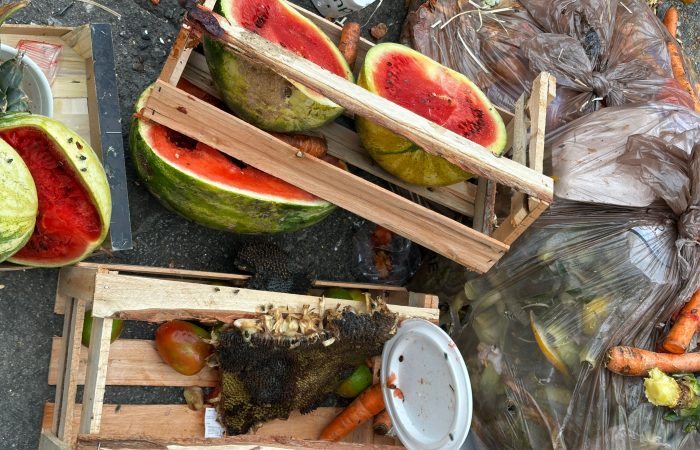
Why do people waste food despite being aware of its environmental consequences?
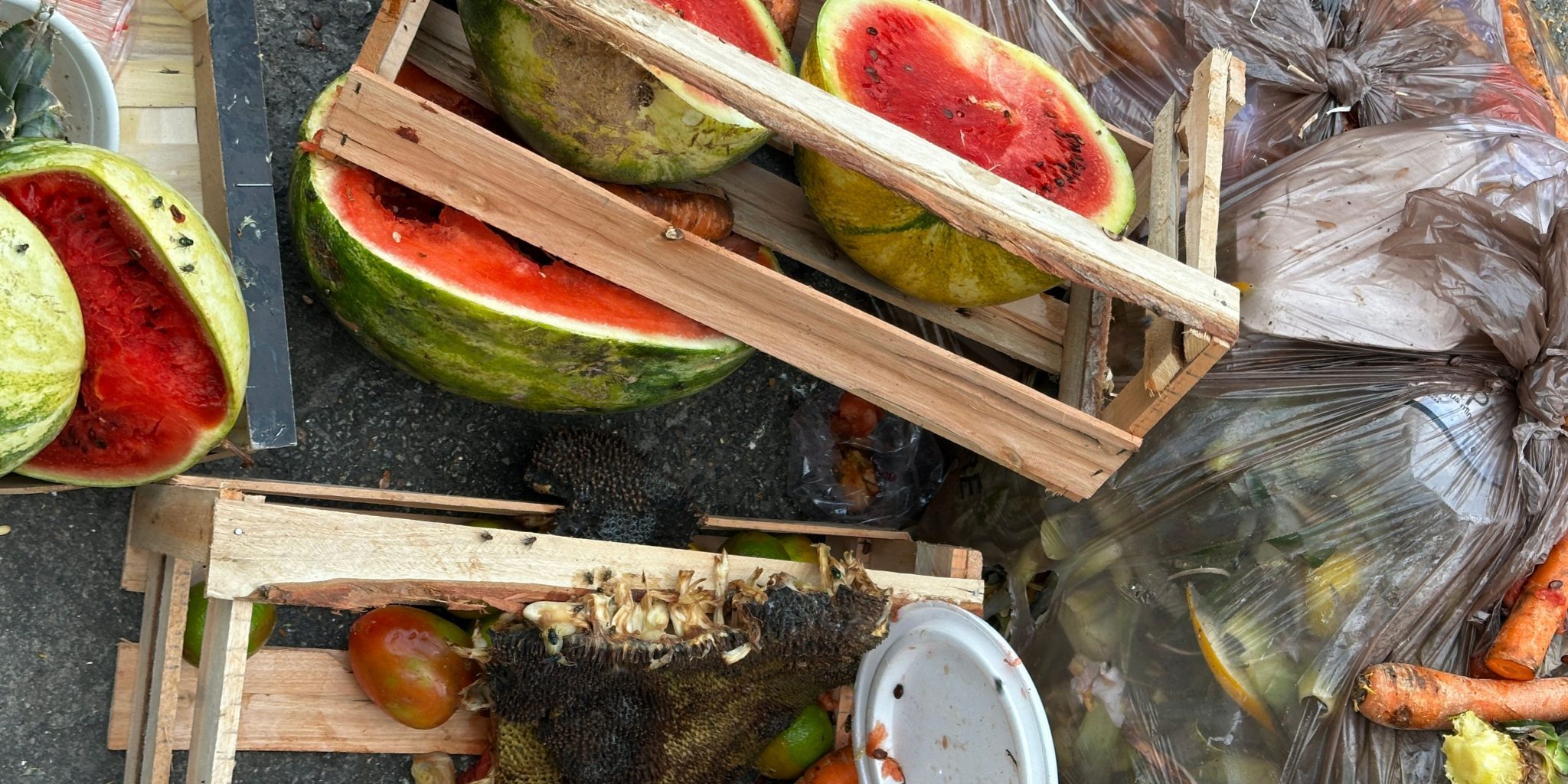
Using Pro-Environmental Behaviour to Understand the Gap Between Environmental Knowledge and Food Waste Behaviour
Summary
Food waste is a significant environmental problem. In Finland, households are responsible for creating the biggest amount of food waste. Despite existing information and education about the environmental consequences of food waste, a considerable amount of food waste is still generated. This article aims to explain the gap between environmental knowledge and food waste behaviour.
The article highlights that the knowledge itself rarely leads to change in behaviour. The environmental consequences are distant, complex, and they occur elsewhere, which may discourage behavioural change. In addition, environmental values often compete with other factors, such as convenience, cost, practicality, and habits.
The primary conclusion of the article is that the information alone is insufficient to reduce food waste. Effective strategies should incorporate financial incentives while addressing individuals' emotions and everyday habits. Furthermore, societal structures should be designed to support and facilitate individuals' pro-environmental behaviour.
Introduction
Food waste refers to food originally meant for human consumption but discarded for various reasons (Kuluttajaliitto, n.d.). In Finland, food production and consumption generate approximately 62–86 kg of food waste per capita each year, amounting to 335–460 million kg nationwide (Heikkilä et al., 2016). Households are responsible for generating the largest share of food waste. In 2023, households generated 53 % of all the food waste in Finland, compared with 23 % generated by industry and 5% generated by primary production (Luonnonvarakeskus, 2026). Consequently, consumers and households represent the greatest potential for reducing food waste.
Despite national and international policies, information campaigns, and education initiatives, a substantial amount of food waste continues to be generated. In addition, consumers are exposed to a wide range of information about the environmental, social, and economic impacts of food waste. This raises an important question: Why do people waste food despite being aware of its negative environmental consequences?
Pro-environmental behaviour refers to actions that contribute to climate-change mitigation. At the individual level, decisions are based on whether behaviour and actions are sustainable and environmentally friendly (Lee & Khan, 2020). The relationship between knowledge and pro-environmental behaviour has been studied for decades. While knowledge has been assumed to be the primary driver of behavioural change, research has consistently shown that knowledge itself rarely results in pro-environmental behaviour. Yet, many organizations' communication and strategies still rely on this assumption. In fact, the idea of knowledge being the driver of behavioural change does not take into account the complexity of human decision-making processes and the difficulty of changing already established habits (Kollmuss & Agyeman, 2002).
In Finland, as in other high-income countries, food waste is primarily generated at the consumer and retail sections of the food supply chain. Therefore, food waste results largely from everyday practices and behaviour, whether conscious or unconscious (Stirnimann & Zizka, 2022). However, individuals are affected by cultural, social, and geopolitical structures, which largely influence whether individuals have both opportunities and resources for environmentally responsible behaviour.
This article aims to add understanding of why people waste food despite being aware of its environmental impacts. The topic is introduced by presenting the key internal and external factors that influence pro-environmental behaviour and further explores how these factors contribute to the gap between environmental knowledge and food waste behaviour.
Factors influencing pro-environmental behaviour
Researchers have long tried to understand why information alone rarely results in behavioural change. Although no single theory is capable of fully explaining pro-environmental behaviour, several studies have identified common factors that significantly influence individual actions (Kollmuss & Agyeman, 2002). These factors can be categorised as external and internal factors.
External factors
External factors include broader societal conditions that influence individuals' behaviour, such as infrastructure, financial circumstances, and social and cultural norms (Kollmuss & Agyeman, 2002).
For food waste reduction, the necessary infrastructure includes systems that enable responsible practices, such as biowaste recycling services. Although recycling food waste does not directly reduce the amount of food waste, recycling infrastructure encourages more environmentally sustainable management practices.
Financial considerations may also motivate people to reduce food waste, and understanding the economic cost of wastage may encourage a behavioural change (Thyberg & Tonjes, 2016). However, the decision-making process is rarely financially rational and is influenced by social, psychological, and infrastructural factors, making it difficult to predict the behaviour solely from financial grounds (Kollmuss & Agyeman, 2002).
Lastly, cultural and social factors play a crucial role in shaping food-related behaviour (Kollmuss & Agyeman, 2002). These factors determine how food is valued, what is considered acceptable behaviour, and whether the food waste is viewed as a problem (Heikkilä et al., 2016).
Internal factors
Internal factors influencing individuals' behaviour include environmental awareness, values, attitudes, emotional involvement, and locus of control.
Environmental awareness is shaped by knowledge, experiences, and observations related to environmental issues. The studies suggest that emotional connection with nature, often developed during childhood, contributes significantly to environmental concern and awareness (Kollmuss & Agyeman, 2002).
Attitudes are either positive or negative feelings towards an object, issue, or behaviour. While it is often assumed that attitudes reflect values and therefore guide behaviour, studies show that attitudes alone are relatively weak for predicting pro-environmental behaviour (Kollmuss & Agyeman, 2002).
Emotions play a significant role in behaviour change and decision-making. Studies have suggested that emotions, such as fear, sadness, concern, and anger, may foster pro-environmental behaviour. However, these emotions are effective when combined with a strong sense of locus of control. In contrast, guilt – which has often come up as the strong triggering emotion for pro-environmental behaviour – does not necessarily have as powerful an effect in behavioural change. Guilt combined with a lack of locus of control might not lead to action at all (Kollmuss & Agyeman, 2002). Negative emotions in general have a stronger positive impact on pro-environmental behaviour than positive emotions (Russell et al., 2017).
It is also important to acknowledge that habits have a significant role in food waste behaviour. The habits are considered automated behavioural patterns, which are executed without careful consideration of their consequences (Russell et al., 2017).
Why is it so hard to change food waste behaviour?
Having identified the factors that influence behavior, it is necessary to examine why environmental concern does not always convert into environmentally desirable behaviour. Although reducing food waste is generally considered important, environmental awareness alone rarely leads to behavioural change.
The barriers to implementing pro-environmental behaviour often arise from the environmental issues’ non-immediate, slow, and complex characteristics. The environmental consequences of food waste are often indirect and are experienced elsewhere, making the issues psychologically distant for consumers. In addition, the complexity of environmental issues makes it difficult to understand the consequences more deeply, which delays the behaviour change even more (Kollmuss & Agyeman, 2002).
Food waste behaviour can also be explained through demand and the least-cost model, according to which individuals choose pro-environmental behaviour if it does not require excessive time, effort, and cost. Consequently, individuals with strong environmental awareness likely make only small environmental actions, yet the positive attitude may not be enough if pro-environmental behaviour requires bigger sacrifices (Kollmuss & Agyeman, 2002). In addition, environmental values often compete with factors, such as convenience, practicality, and price (Abrahamse, 2019, p. 11). Practices that reduce food waste, such as planning, proper food storing, and preparation, require additional time and effort, which may discourage their adoption despite positive environmental attitudes and values. Furthermore, food-related habits and routines are strongly connected to everyday life, making it difficult to recognise and change them (Russell et al., 2017).
As stated previously, awareness itself is not a great driver for behavioural change, yet some information about the environmental issues is required to experience emotional involvement towards the environment (Kollmuss & Agyeman, 2002). According to Festinger's theory of cognitive dissonance, individuals tend to unconsciously seek information that aligns with their beliefs while avoiding information that challenges them (Miller et al., 2017). Consequently, if an individual does not consider food waste as an important environmental issue, the differing information may be ignored. In addition, people may justify their environmentally harmful actions by balancing them with environmentally friendly actions (Sörqvist & Langeborg, 2019). For instance, if an individual is a vegetarian, they may – consciously or unconsciously – justify some of their non-environmentally friendly actions, such as throwing away food.
Taken together, food waste behaviour is a complex combination of cognitive, emotional and habitual factors. Therefore, food waste behaviour can not be explained solely by lack of information or environmental awareness.
Conclusions
This article aimed to examine why people waste food despite being aware of its environmental consequences. The literature reviewed suggests that food waste behaviour can not be explained by the lack of necessary knowledge alone. While environmental awareness prerequisite, many other factors are required to ultimately change the behaviour.
Environmental awareness, values and attitudes often compete with everyday routines, habits and convenience. Even with strong environmental awareness, bigger sacrifices can be insurmountable, and they fight against the idea of a fulfilling lifestyle. Furthermore, the distant and indirect environmental impacts of food waste make it difficult for individuals to observe them during their everyday lives. As a result, the motivation to change the behaviour can be weak.
The individual's behaviour is strongly guided by societal and institutional factors, which may unintentionally enable a food-wasting lifestyle and patterns. In high-income countries, the economic consequences of food waste are often little or modest to individual consumers, which may further reduce the economic need to reduce food waste.
Consequently, reducing food waste requires more than information campaigns or education. Although information remains important for environmental awareness, effective interventions should take into account emotions, habits, and broader structural factors to foster pro-environmental behaviour. In addition, economic incentives should also be considered while planning new food waste reduction strategies. Ultimately, food waste reduction is not only individuals' responsibility, but sustainable choices should be made easier and more visible for individuals at societal levels.
Veera Seikkula
Researcher and project manager, 0009-0007-1151-2406(opens in new tab), Maritime Logistics Research Center. Veera is a bachelor of biotechnology and food engineering and a chemical engineering (MSc) student. Veera specializes in water purification, chemical and biotechnological processes, and circular economy solutions.

The article has been written as part of the Ce4Re project, which was funded by the Interreg Central Baltic programme. The project aimed to promote the circular economy and add knowledge and skills at the restaurant level.